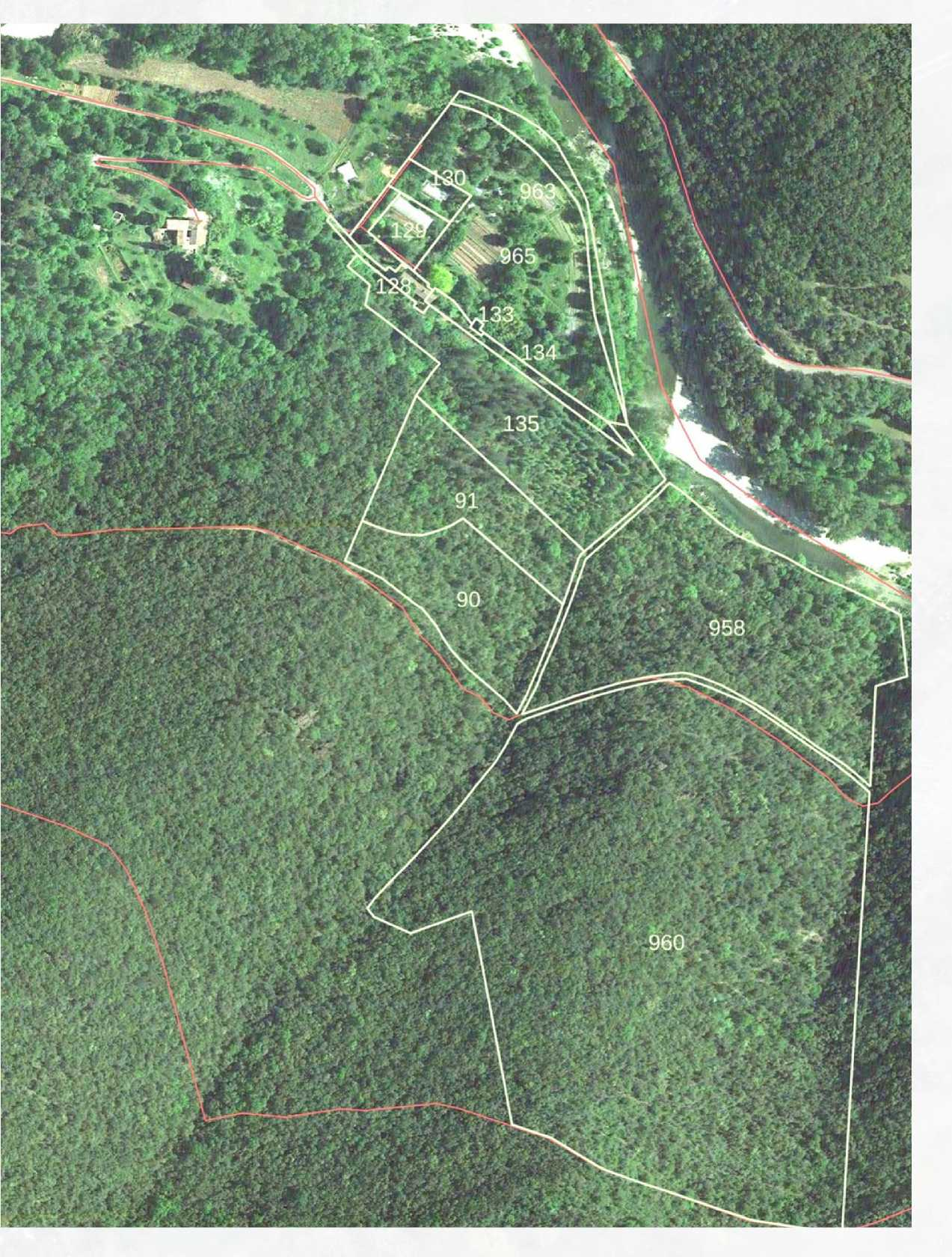
The 14 hectares of the Cambon, by the Gardon river in Mialet.
In the Cévennes as elsewhere, it is becoming harder and harder to set up as a farmer. The first obstacle has a name: access to land. That is exactly what our solidarity land trust wants to change — starting with the Cambon farm.
Access to land, a major challenge
Buying a farm today is often an uphill battle. Prices climb, farmland is bought up to be built on, planted over or left abandoned, and farms that come up for sale often go to the highest bidder rather than to those who want to bring them to life.
The result: would-be farmers full of energy and skills hit a wall, and nourishing land gradually leaves agricultural use. In a territory like ours, where small-scale farming shapes the landscape and local life, that is a considerable loss.
Our answer: making the Cambon a commons
Rather than letting yet another farm lose its purpose, we want to make it a commons: an asset removed from speculation, whose agricultural use is secured over time, and which belongs collectively to the people of the territory.
“A commons: belonging to all, concerning everyone, to which all have a right or a share.” (Larousse dictionary)
In practice, we are creating a non-profit land trust, run by local residents, that buys farmland and agricultural buildings to entrust them lastingly to farmers. Ownership stays collective; use is shared and protected. No one will be able to resell the farm to turn it into anything other than a living, nourishing place.
A collectively-led project
This land trust is not one person’s affair. It brings together several local associations and collectives — Cévennes 2050, Fruits Oubliés & biodiversité en Cévennes and Terres Vivantes en Cévennes — gathered within the Foncière en Cévennes association, with the support of a network of social and solidarity economy partners.
This collegial governance is a guarantee: decisions are made together, over time, serving the common interest rather than private profit.
The Cambon, first act
Acquiring the Cambon farm, in Mialet, will be act one of this land trust. With its 14 hectares of terraces and woodland, its springs, its ponds and its stone building of more than 300 m², it is an ideal place to embody our project: producing and processing, experimenting, passing on and welcoming.
And it will only be a beginning. Every farm preserved opens the way to the next. Step by step, place after place, we want to give the territory back the means of its autonomy.
In practice, the operation represents a goal of €400,000, in two stages:
€400,000
1st stage
€200,000
Purchase of the land and the Cambon farm.
2nd stage
€200,000
Restoration, fitting out, bringing up to standard and investments.
How we plan to act
- Give farmers access to land
- Restore housing for farmers and project leaders
- Create shared spaces and workshops
- Develop accessible training and tools around autonomy
- Run a collegial, lasting and shared governance
And where do you come in?
A project like this can only exist if it is carried by many people. Your gift, tax-deductible, contributes directly to buying the Cambon. And every share grows the circle of those who believe in another way of living in the Cévennes.
← Back to news